Ceramic pieces are central to Matisse’s work. From his early years as an artist, he began collecting them, placing them in his paintings of still lifes and interiors. During his Fauvist period, he collaborated with the ceramist André Metthey, decorating vases and plates and even creating a ceramic wall piece for the home of one of his collectors. Although he abandoned this practice before the First World War, he happily returned to the medium at the end of the 1940s for the painted tile decoration of the Chapelle du Rosaire in Vence and later for La Gerbe.
It is for these reasons that ceramics as a medium seemed a natural choice from the very beginning for Maison Matisse. The production of the objects in the collection, La Musique, was entrusted to an artisanal workshop in Italy, chosen for a savoir-faire passed down through several generations.
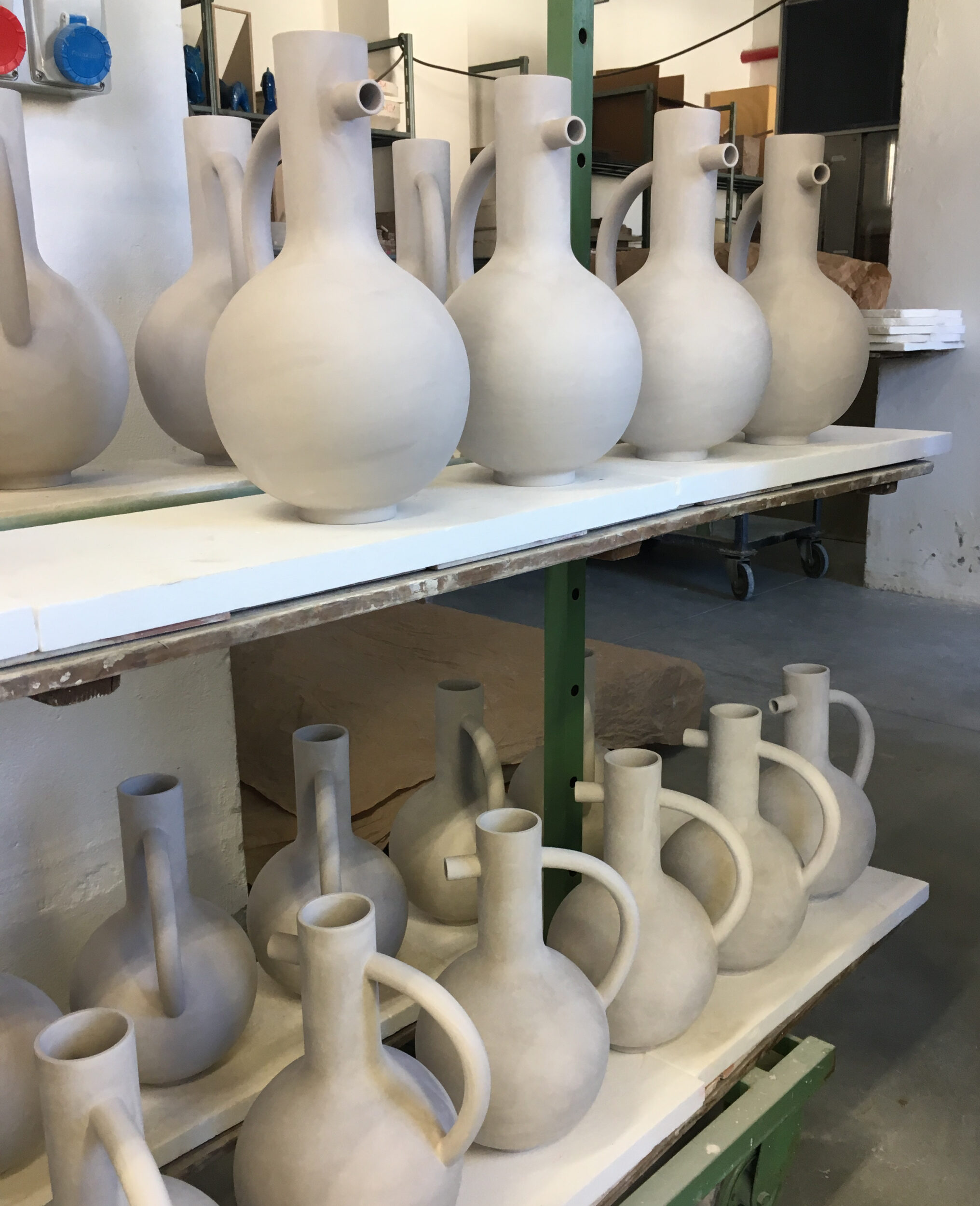
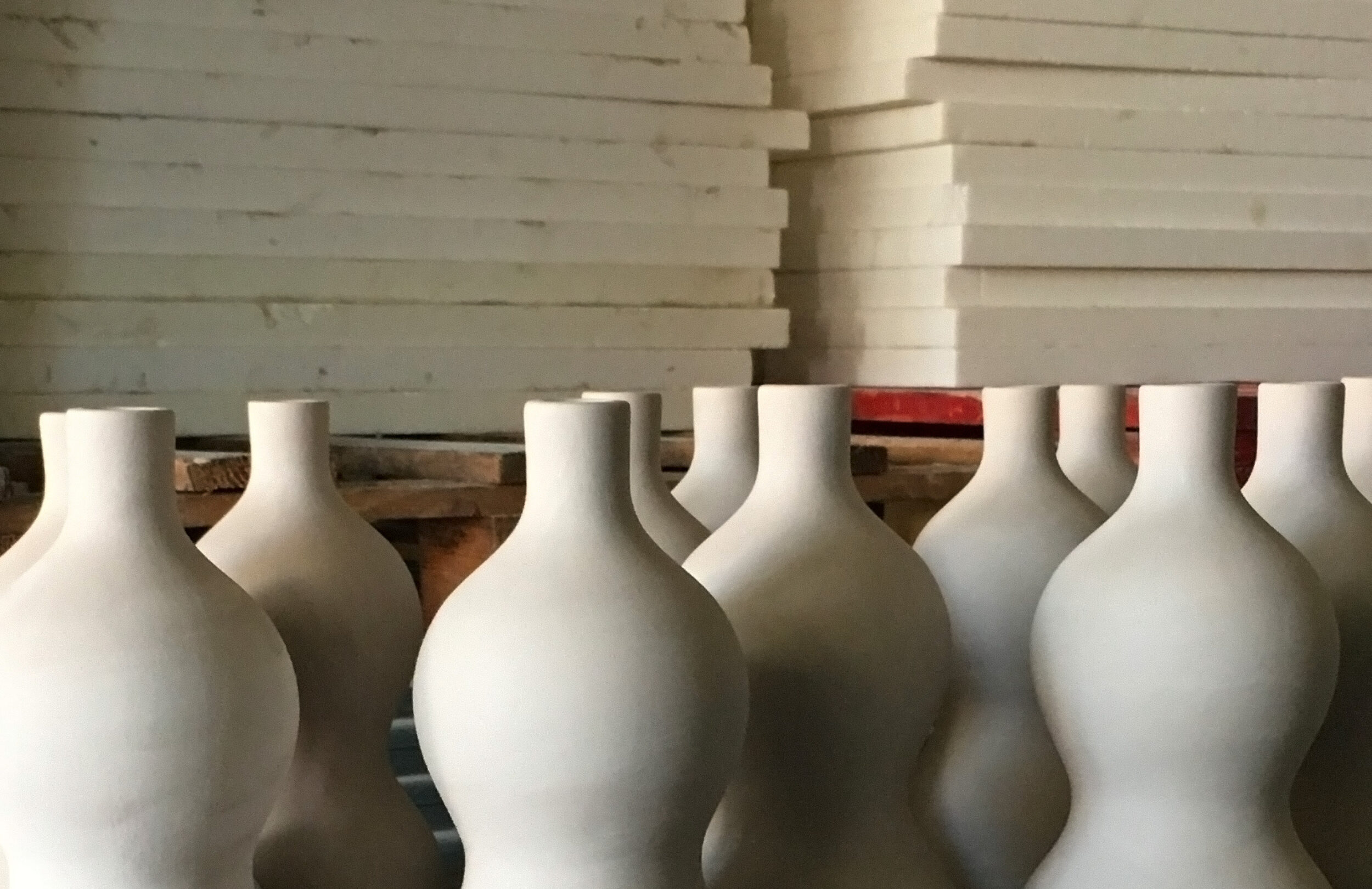
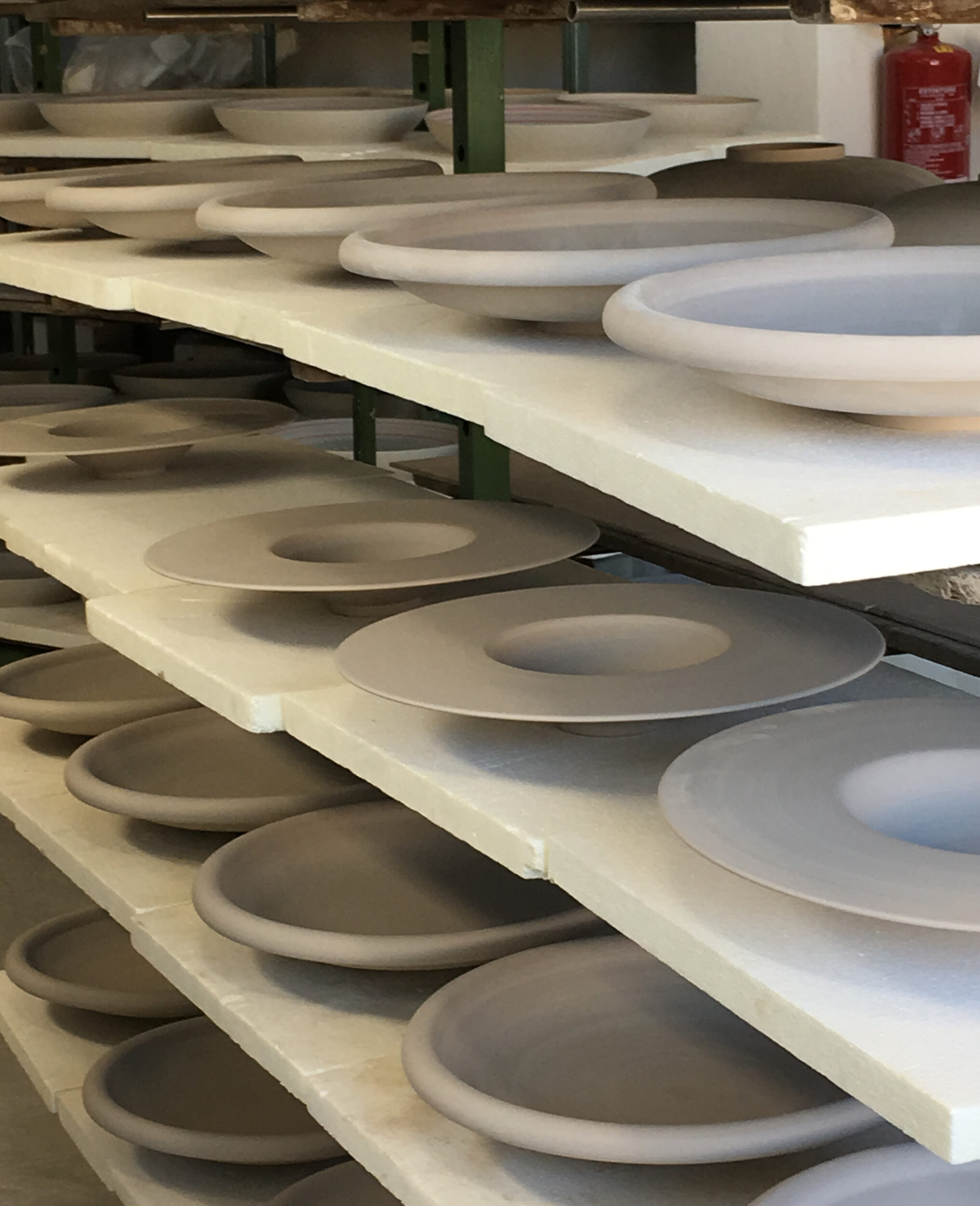
Due to the originality of the shapes designed by Marta Bakowski for the collection La Musique, the ceramic pieces are cast in plaster moulds, then, following an initial firing; the decorative motifs are applied using the ‘spolvero’ technique.
Spolvero is a traditional technique for transferring patterns that has been used since the Renaissance. A drawing is perforated onto cardboard and then applied to the piece. By rubbing coloured powder through the holes, the image is transferred as a stippled pattern. The craftsman can then paint the decoration according to the applied design. Precise and traditional, this process allows complex decorations to be faithfully reproduced whilst retaining the sensitivity of handcrafted work.
The pieces are then subjected to a final firing, known as ‘Grand Feu’, which brings out the colours and makes the ceramic perfectly solid and watertight.
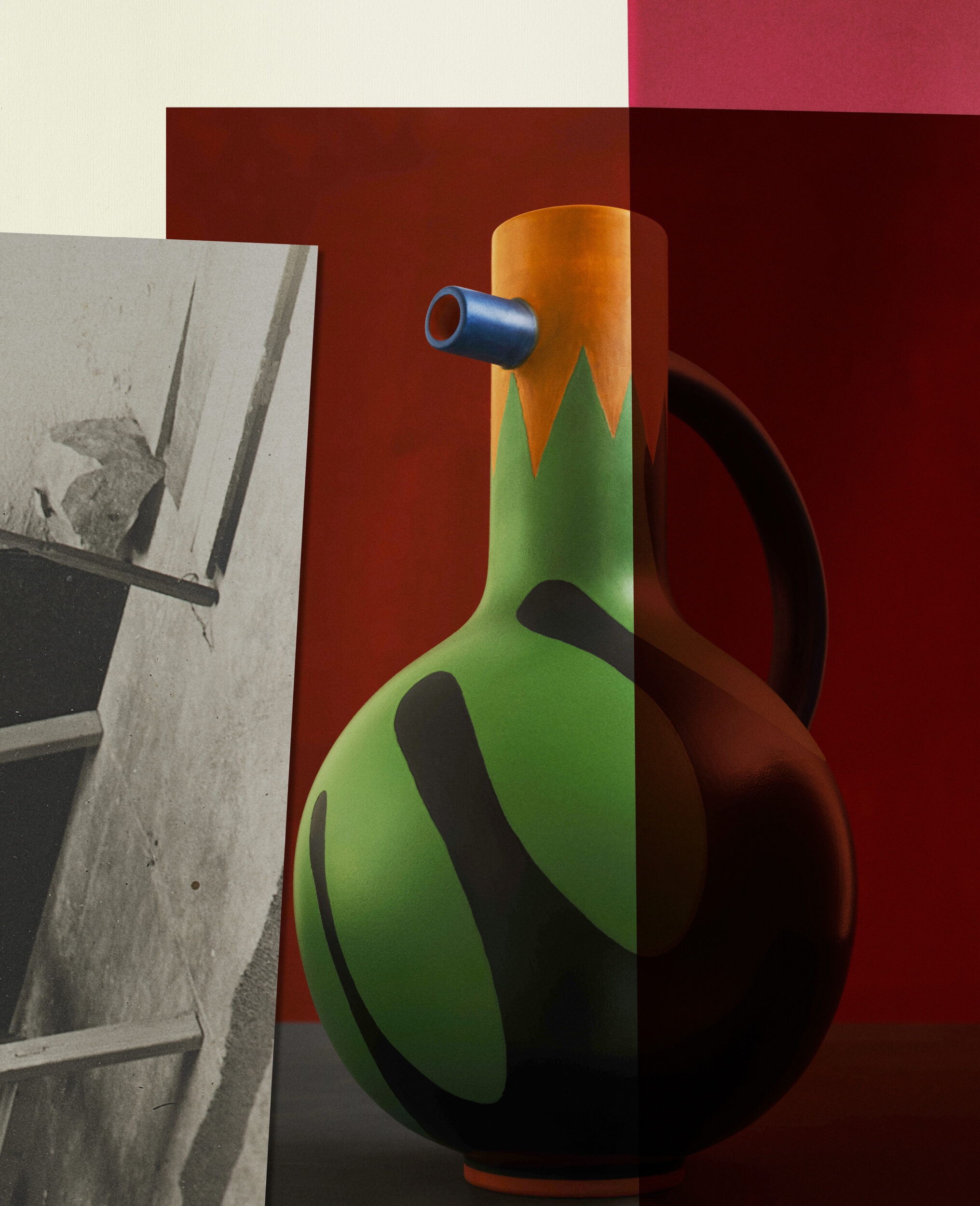
With music as its central theme, this first collection celebrates one of Matisse’s great passions. A violinist, music lover and jazz enthusiast, he likened his own work to that of a composer.


